IP Monochrome

2006-24, site Internet, photographie, peinture.

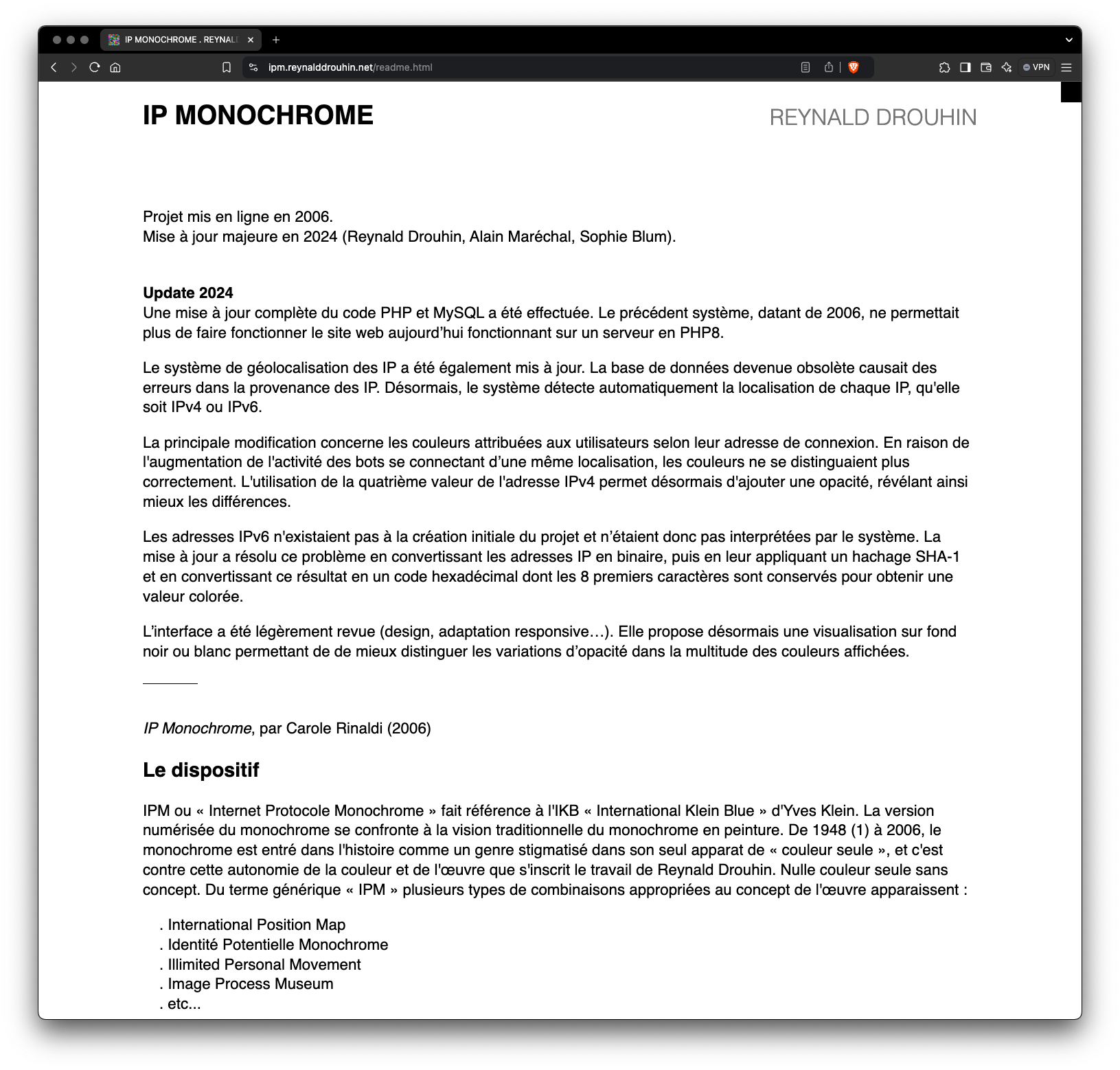
Mise à jour majeure en 2024 (Reynald Drouhin, Alain Maréchal, Sophie Blum).  

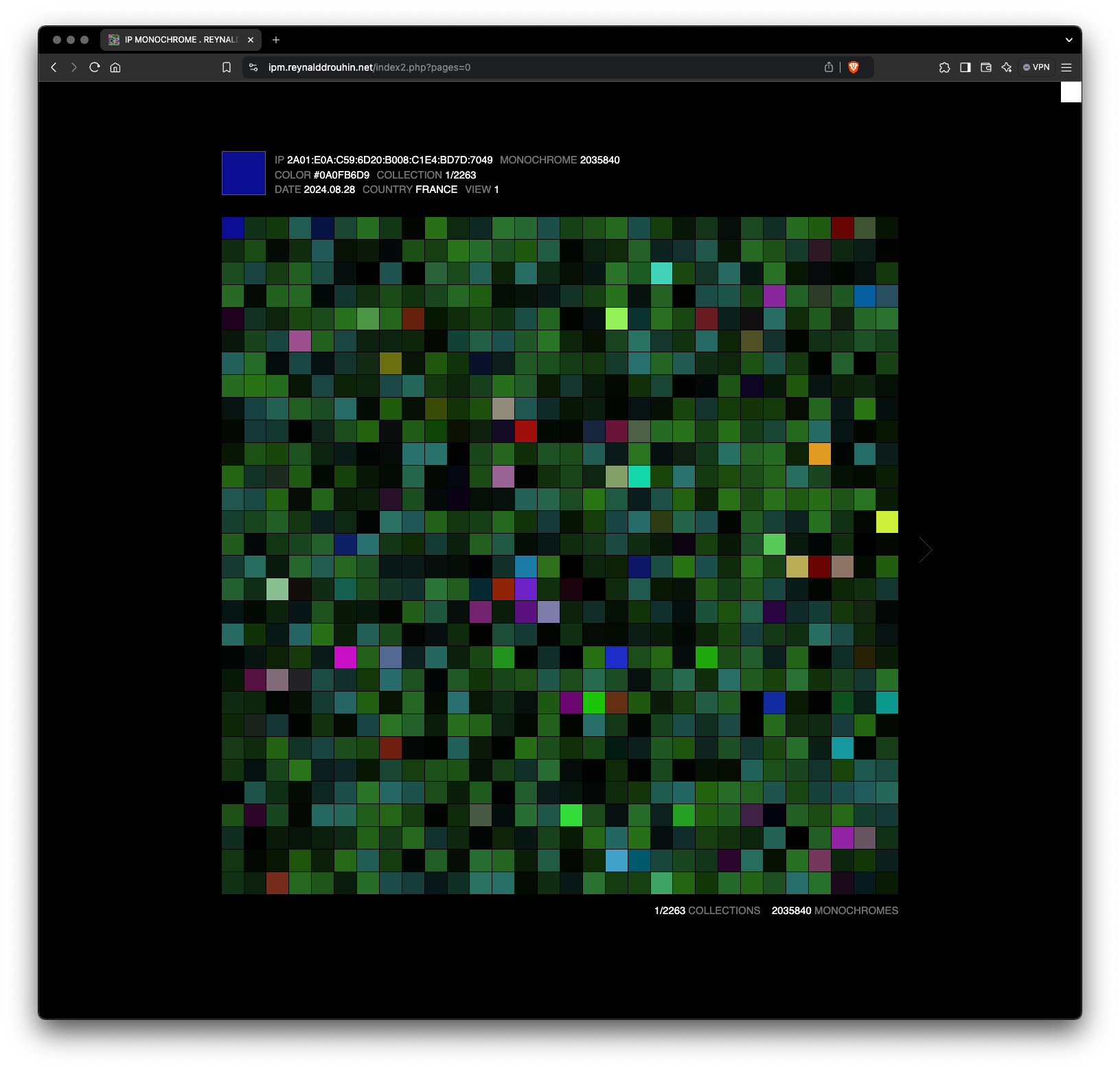
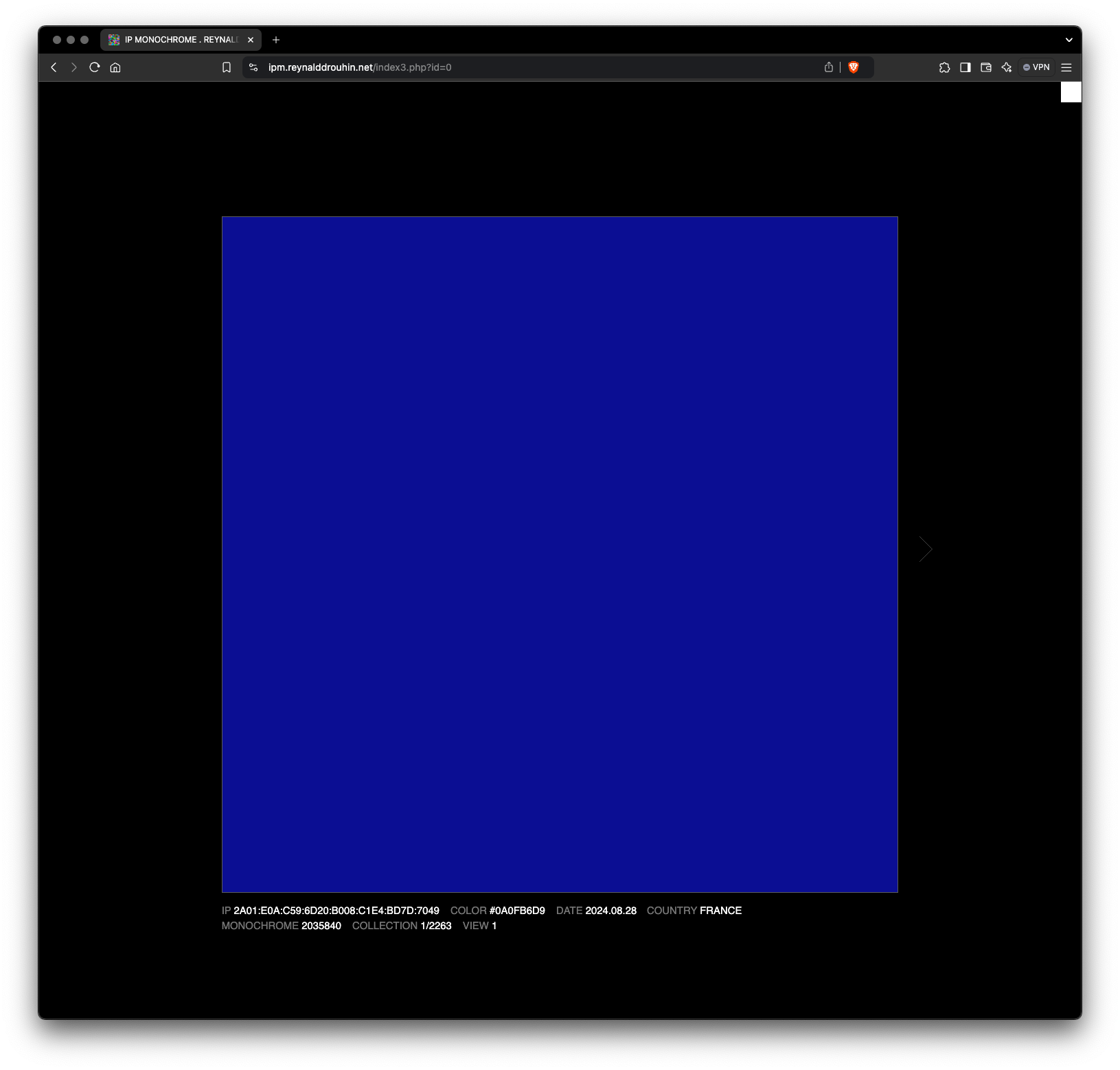
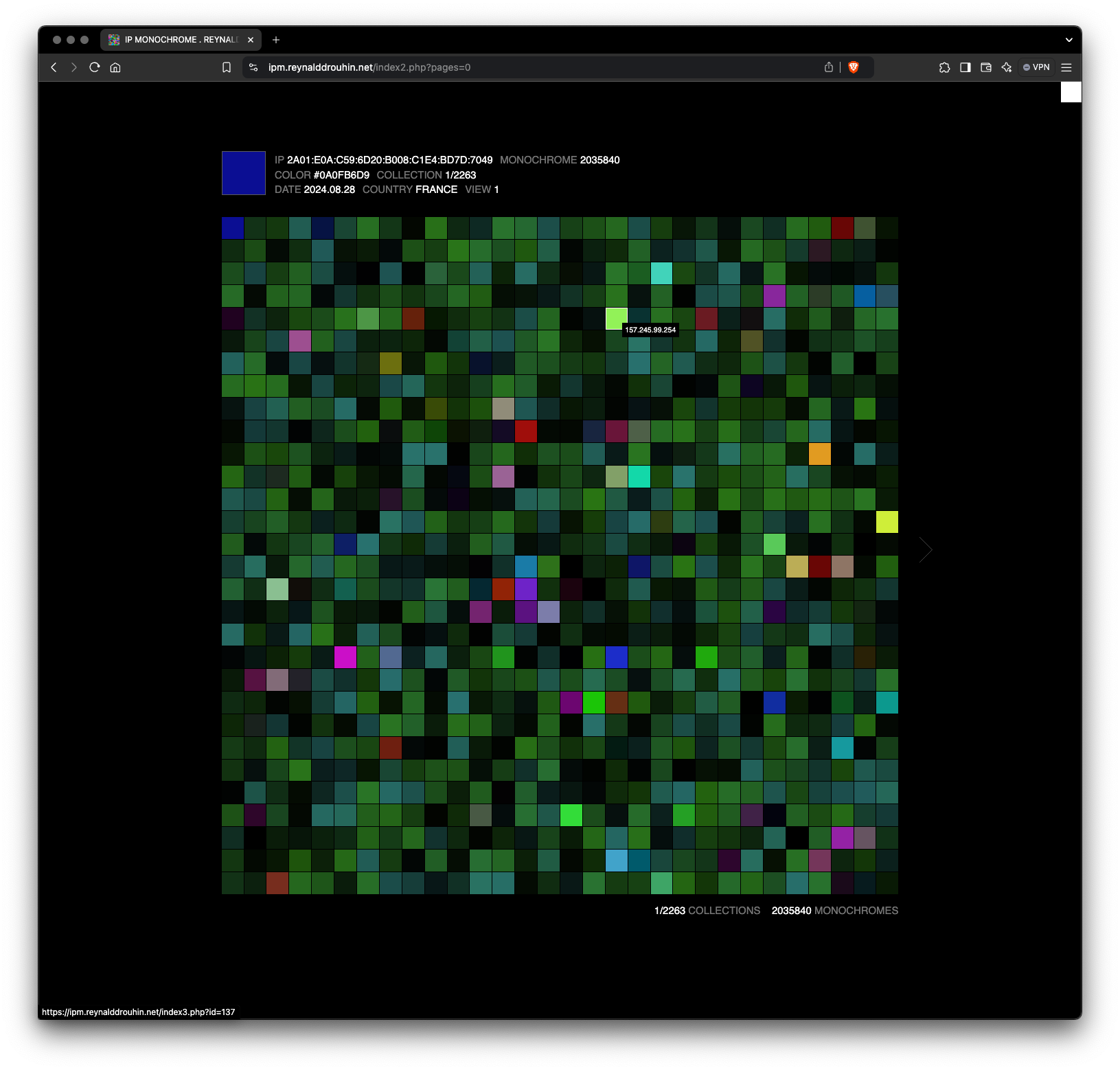
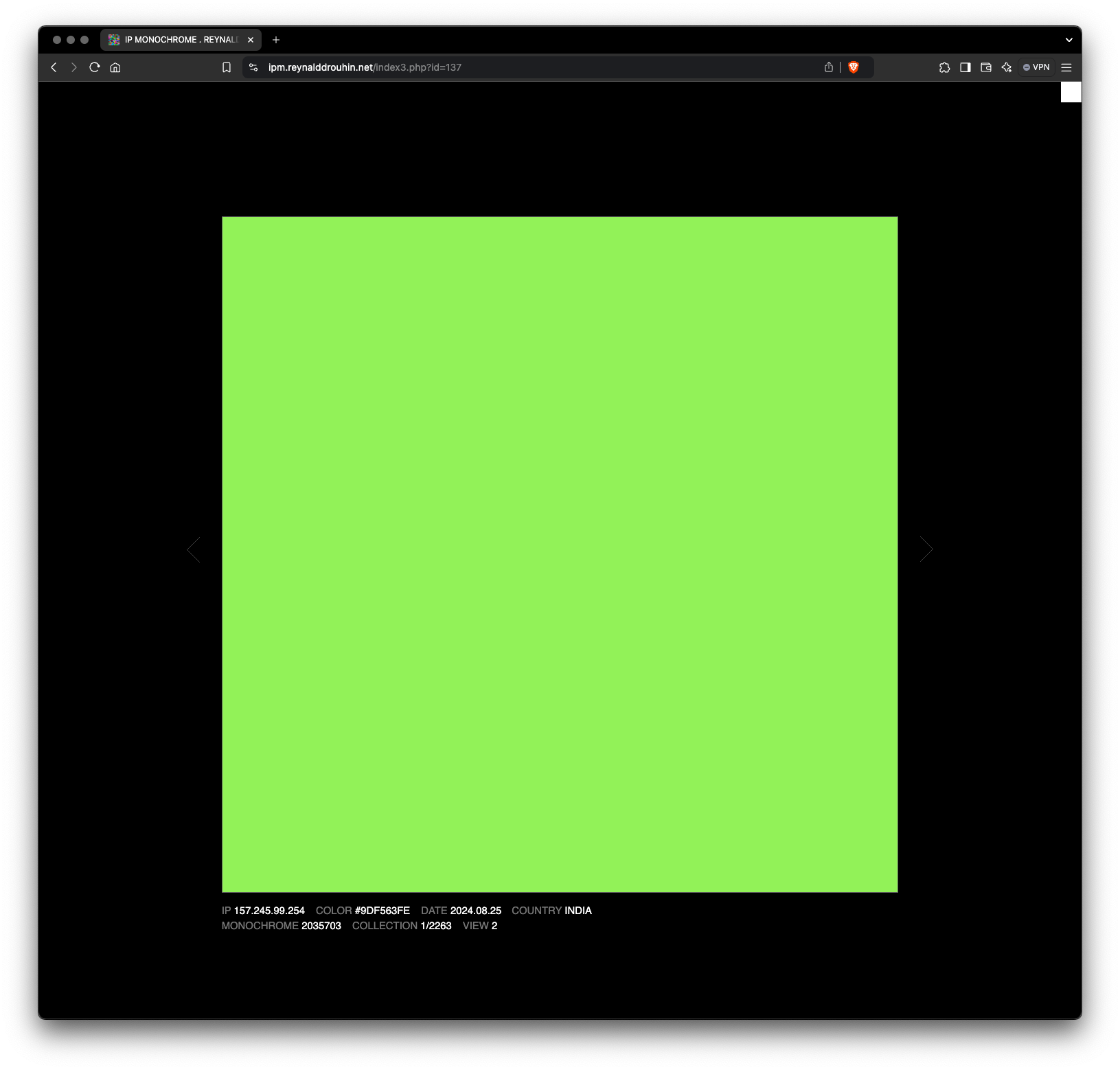
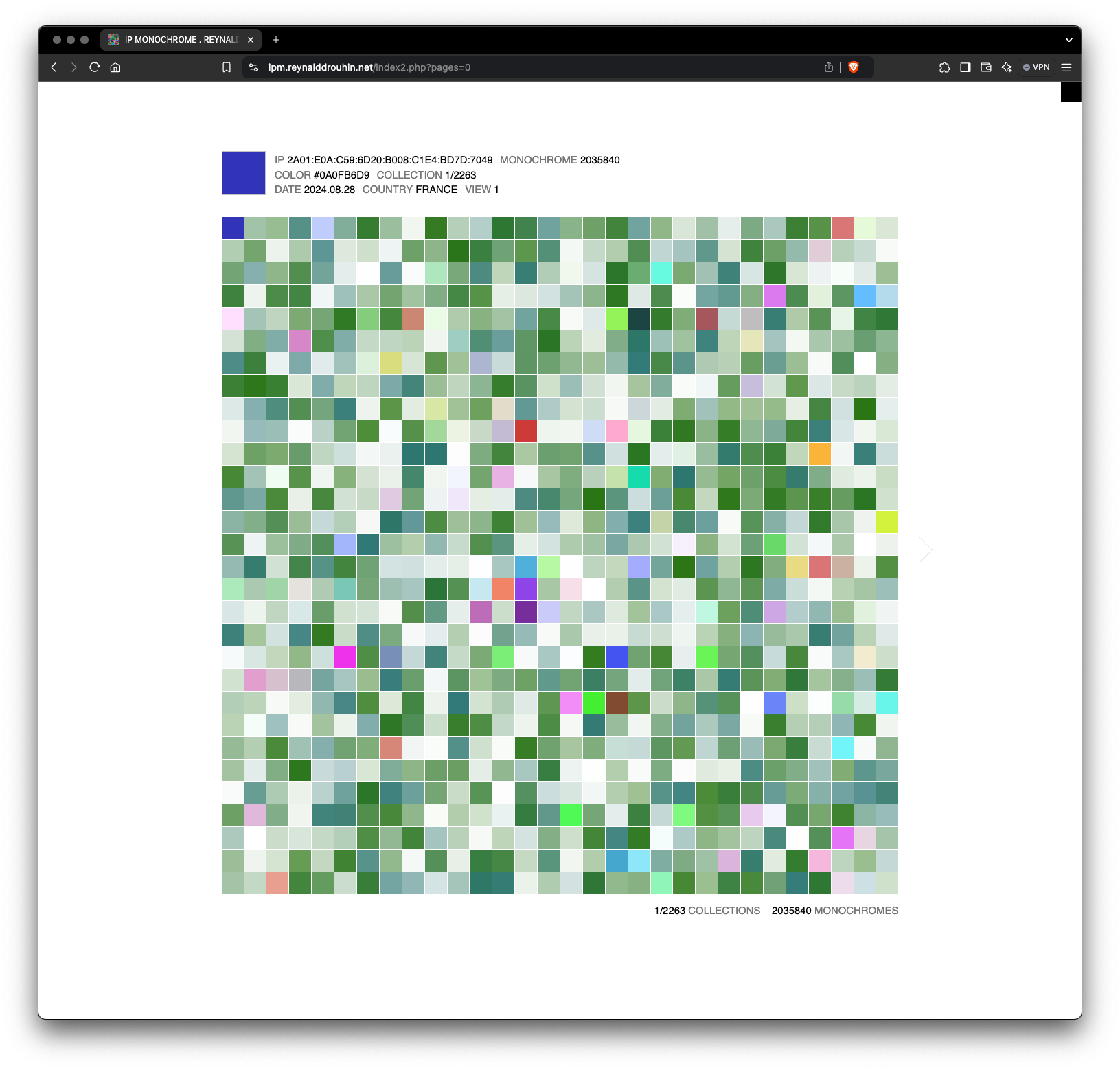
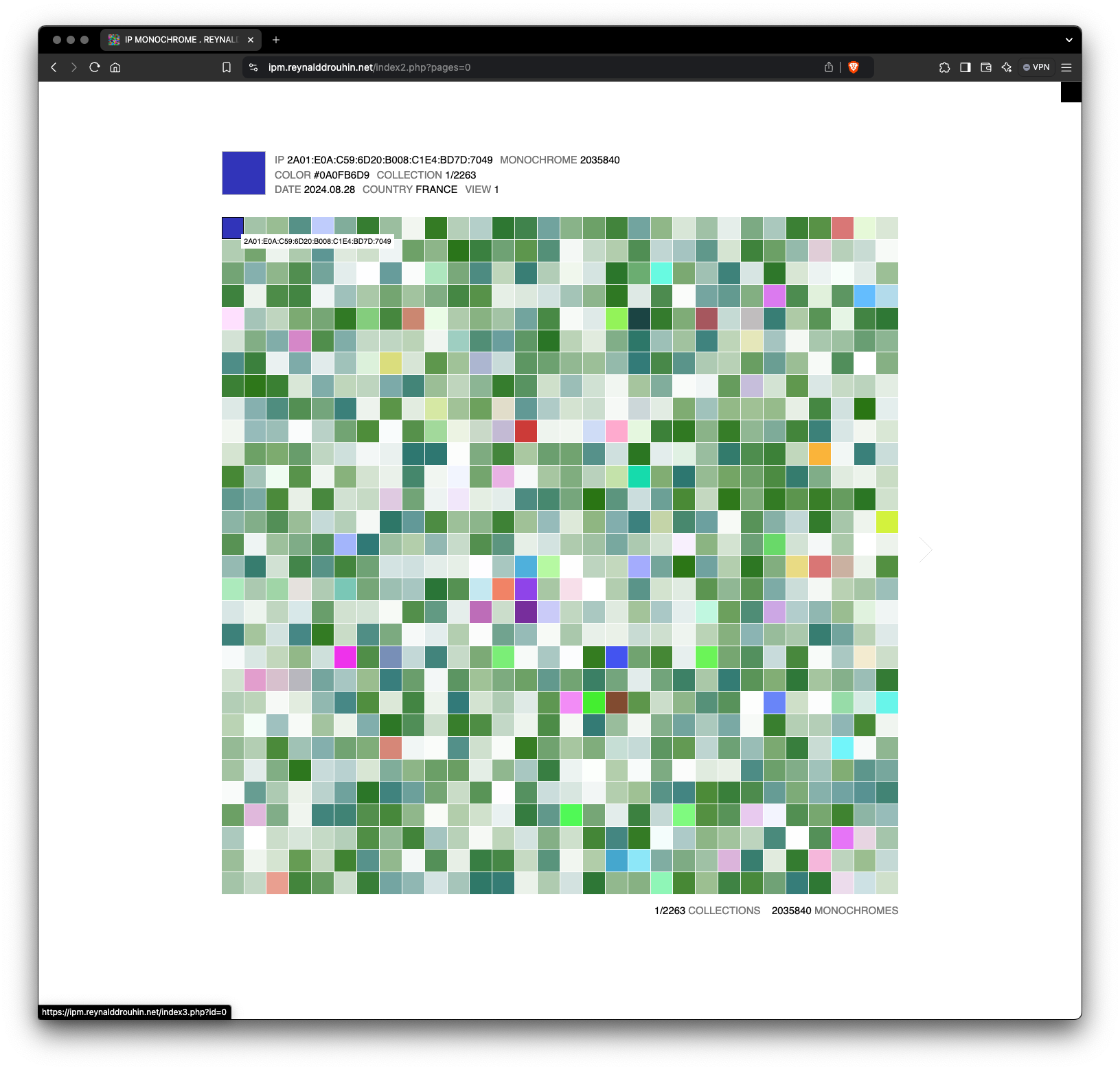
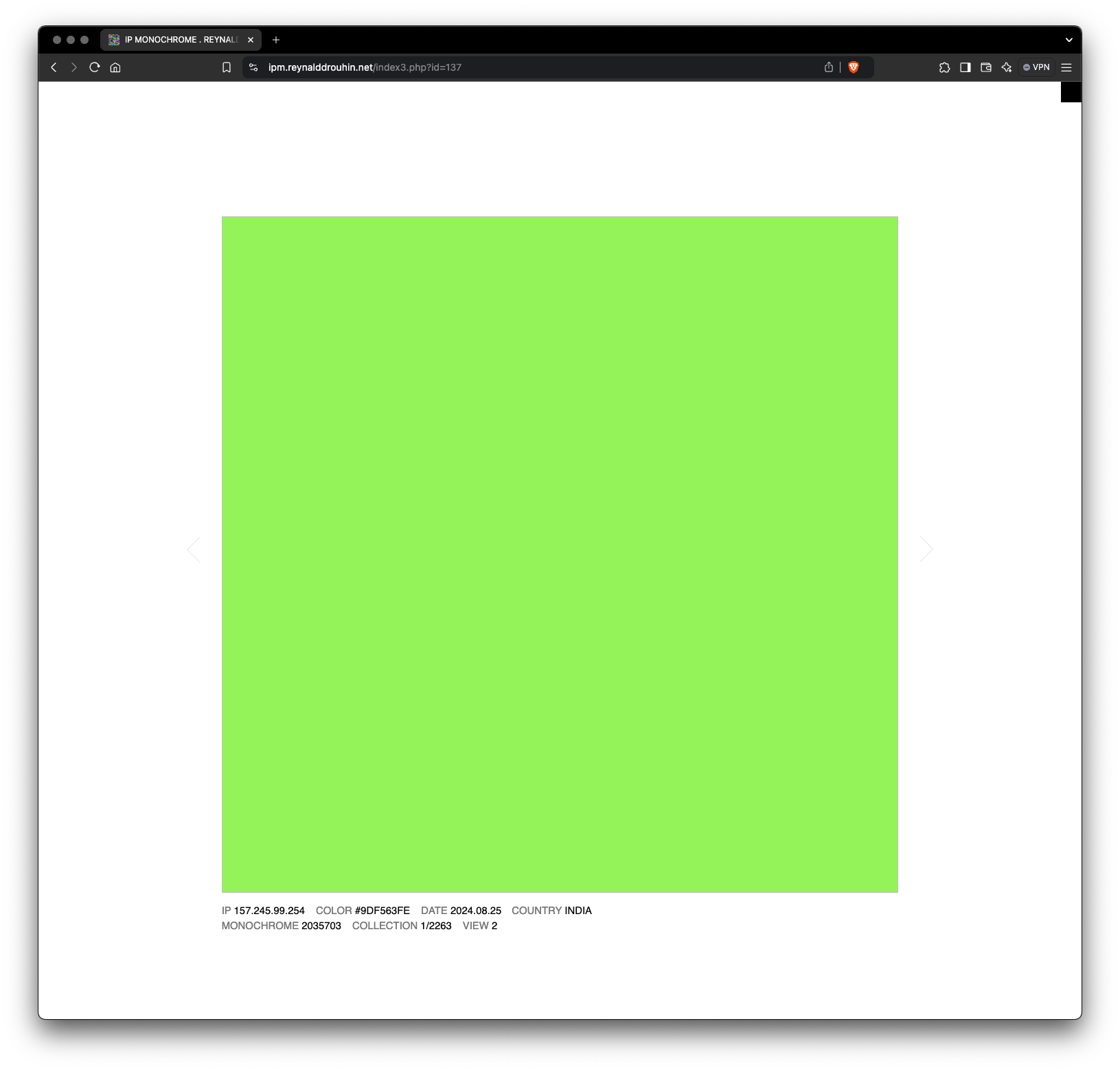
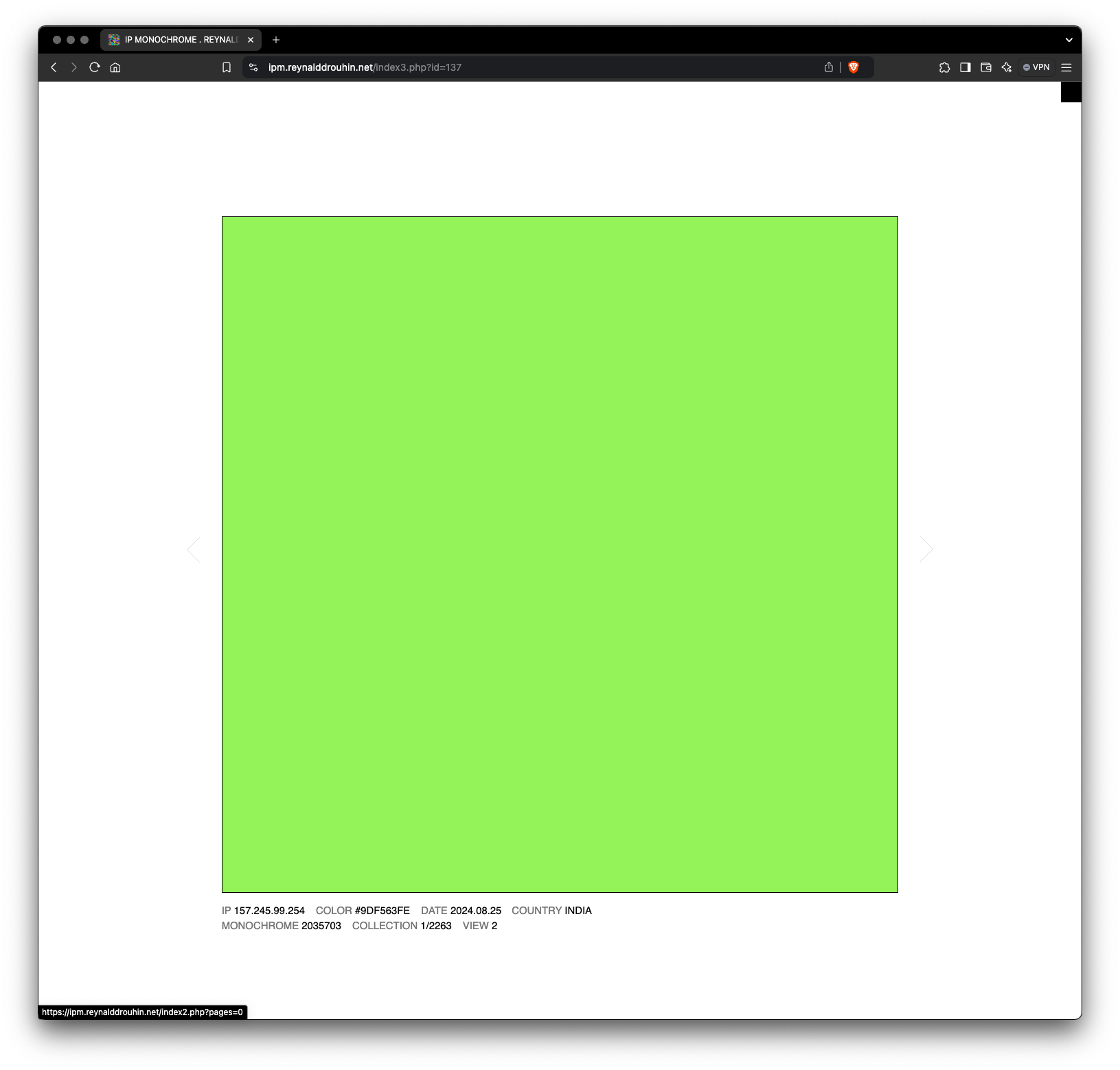
Mis en ligne en 2006 et réactualisé en 2024, IP Monochrome transforme chaque connexion au site en un monochrome. L’adresse IP du visiteur est interprétée par un protocole qui lui attribue une couleur. À chaque passage, une nouvelle surface colorée rejoint ainsi une collection constituée progressivement par les connexions au réseau.

L’adresse IP est habituellement une donnée fonctionnelle et invisible, utilisée pour identifier et acheminer les communications entre machines. IP Monochrome la déplace vers le champ de la représentation : un numéro devient une couleur, une connexion devient une image. Le visiteur ne choisit pas son monochrome. Celui-ci est produit par la traduction de l’identifiant que le réseau lui attribue.

Le projet confronte ainsi deux formes apparemment opposées. D’un côté, l’adresse IP appartient à l’infrastructure technique d’Internet, à ses mécanismes d’identification, de localisation et de traçabilité. De l’autre, le monochrome renvoie à l’histoire de la peinture et à une forme réduite à sa manifestation la plus élémentaire, une surface et une couleur. Le protocole fait passer l’une dans l’autre.

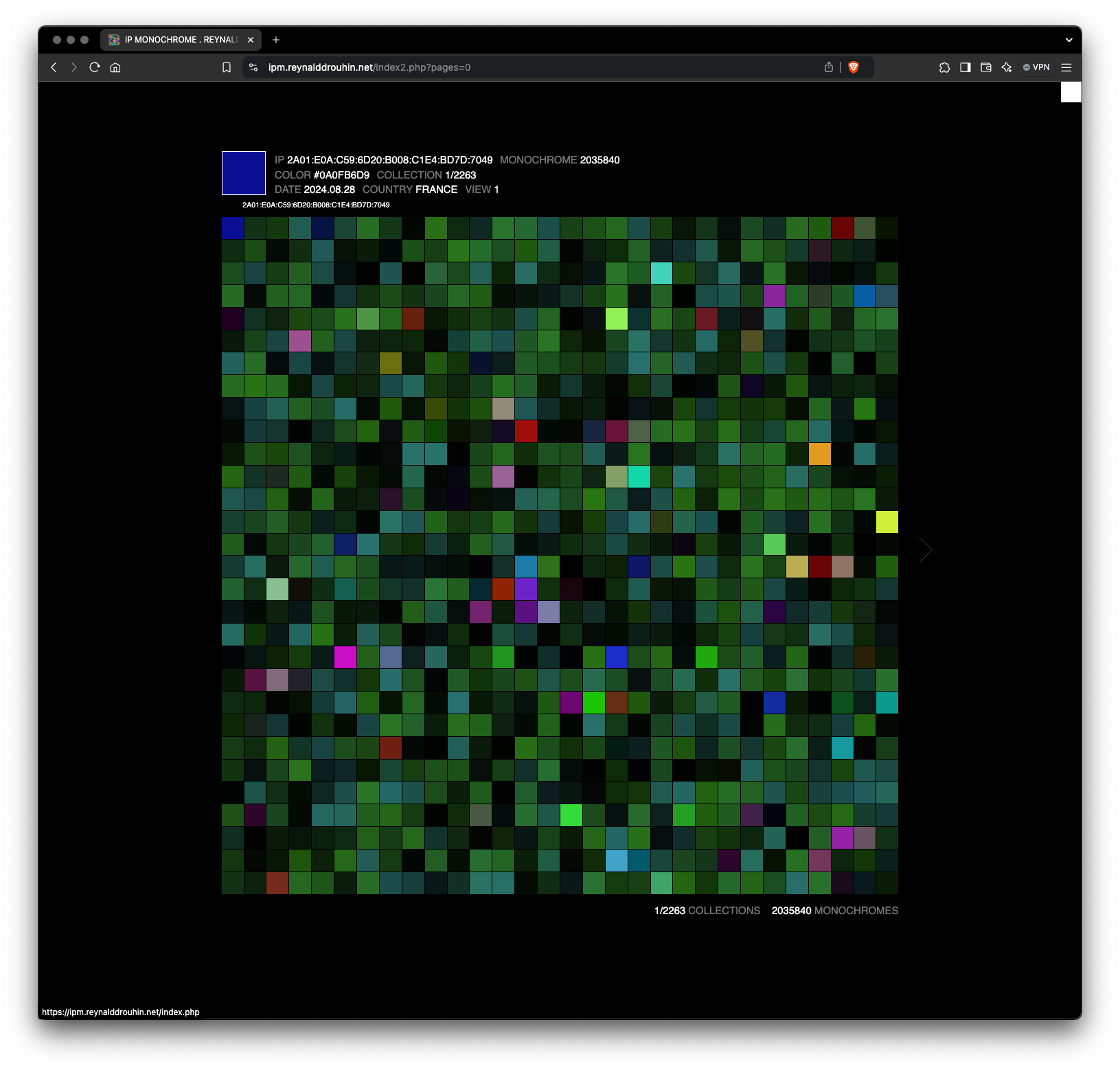
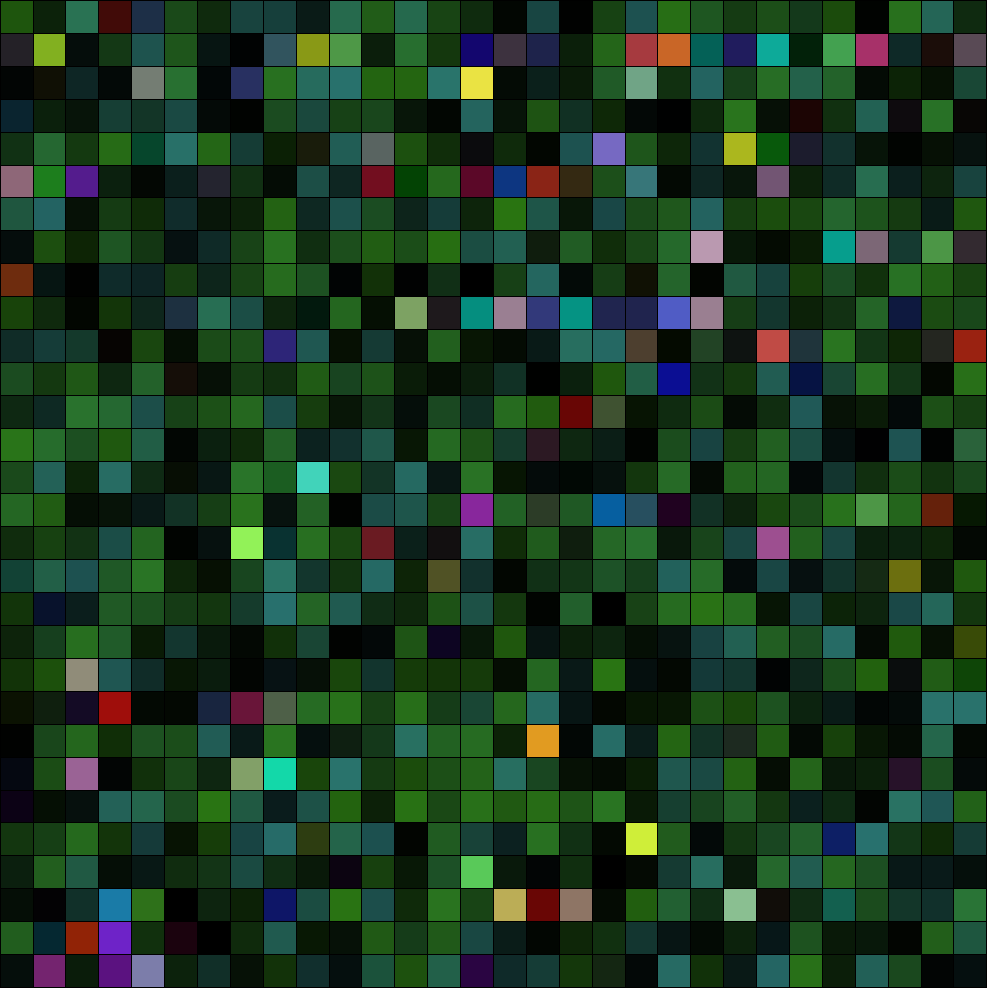
Mais IP Monochrome ne produit pas seulement des images individuelles. Chaque connexion vient s’ajouter aux précédentes et participe à la construction d’une archive collective. La grille accumule des présences qui ne sont jamais représentées directement : aucun visage, aucun nom, aucun portrait, seulement la traduction chromatique d’un passage sur le réseau. Le monochrome devient ainsi une forme minimale de portrait numérique.

Cette accumulation transforme également le site avec le temps. La collection dépend de ceux qui le visitent, mais aussi de l’évolution d’Internet lui-même. Adresses IPv4 et IPv6, géolocalisation, automatisation et multiplication des connexions non humaines modifient progressivement la population qui traverse le dispositif. La mise à jour de 2024 ne consiste donc pas seulement à rendre compatible un programme ancien avec les technologies actuelles : elle confronte le protocole conçu en 2006 à un réseau qui a lui-même profondément changé.

IP Monochrome met ainsi en relation identité, couleur, réseau et mémoire. Une information destinée à faire fonctionner Internet devient une forme visible, tandis que l’accumulation des monochromes constitue la trace collective et évolutive de ceux, humains ou machines, qui ont traversé le projet.


Voir capture et archive de l’ancienne version

IP Monochrome est une Production LUDART, Poitou-Charentes – France RURART – Espace d’art contemporain
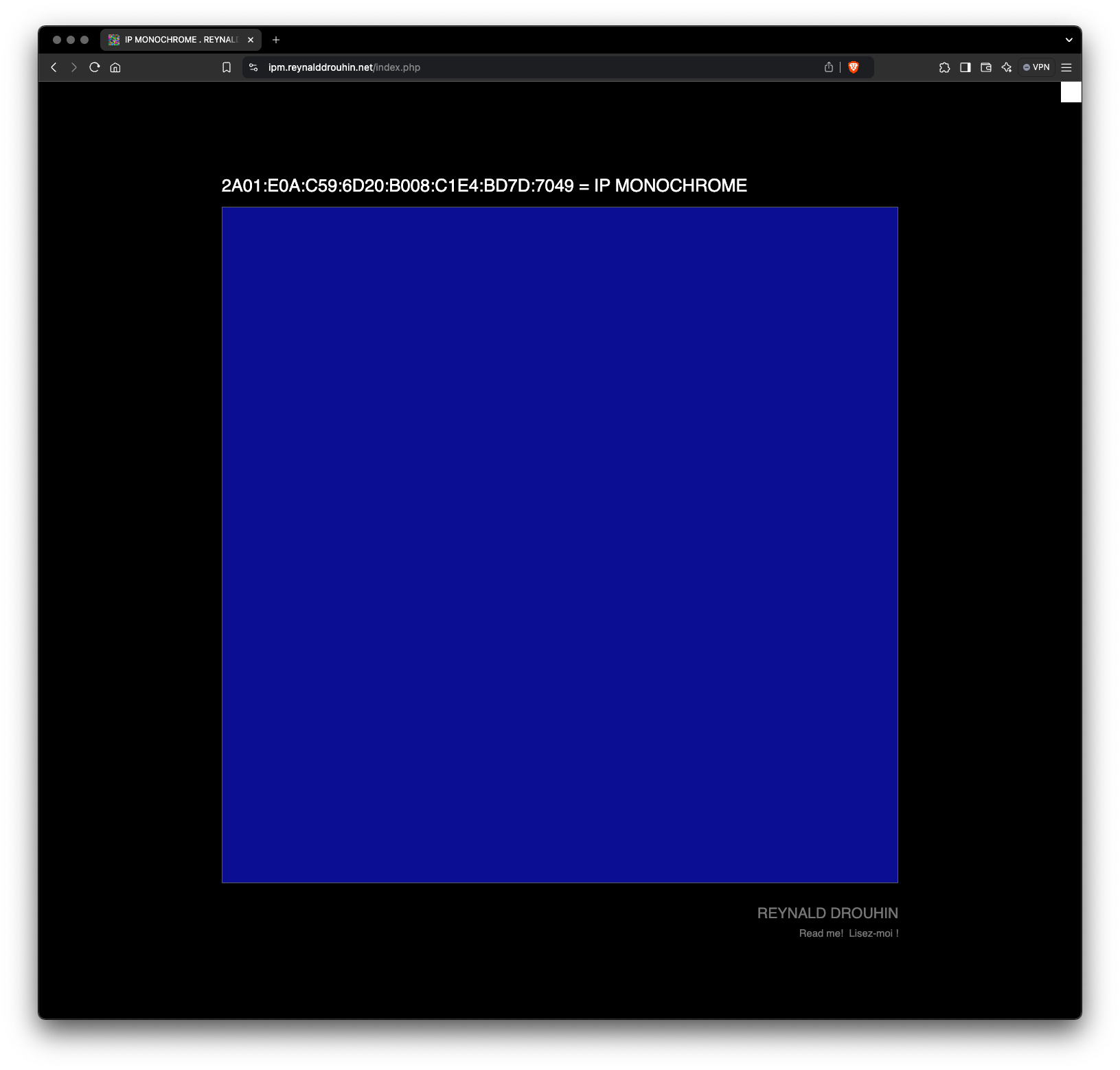
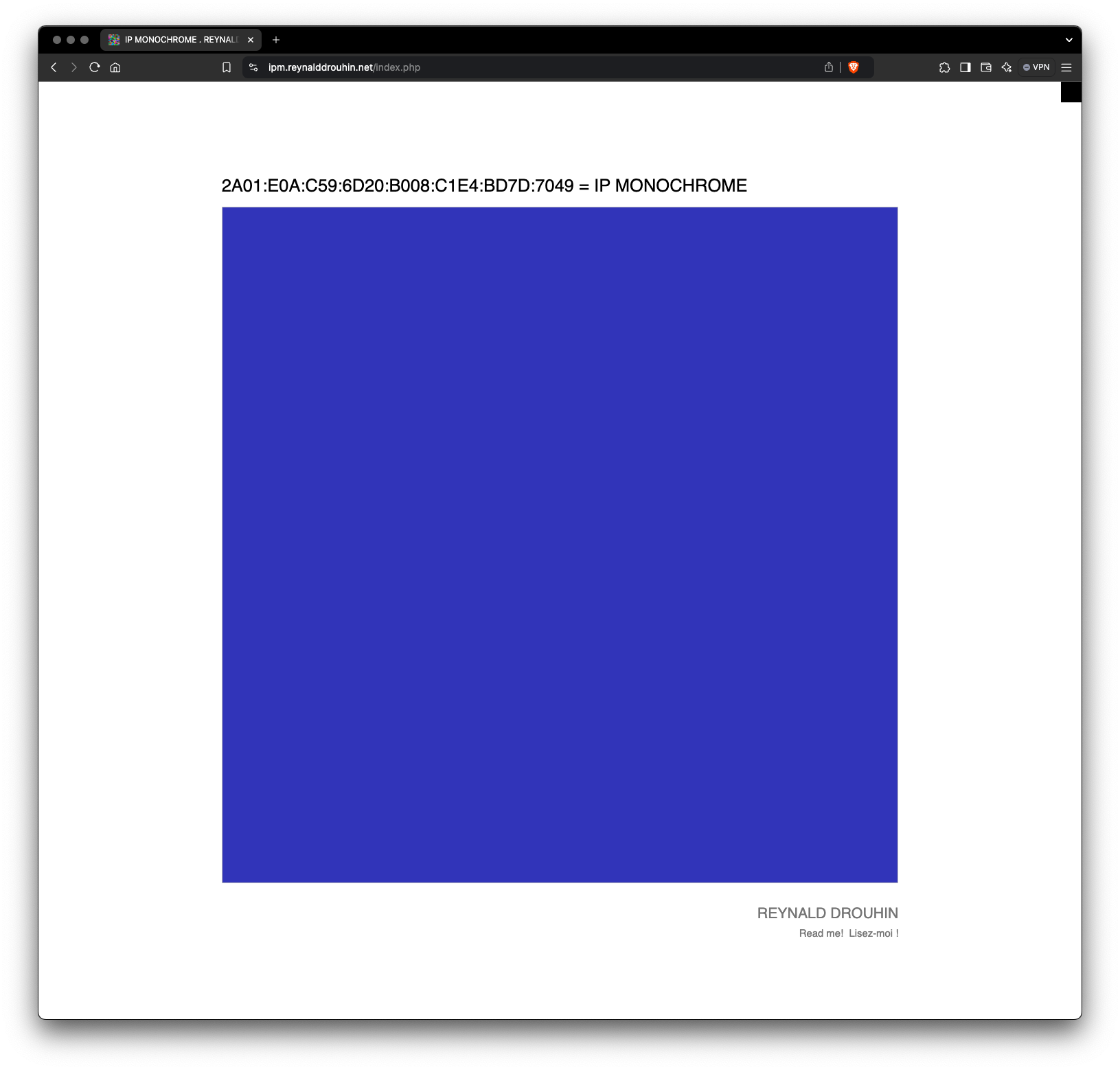
Launched online in 2006 and reactivated in 2024, IP Monochrome transforms each connection to the website into a monochrome. The visitor’s IP address is interpreted through a protocol that assigns it a color. With each visit, a new colored surface joins a collection gradually formed by successive connections to the network.

An IP address is usually a functional and invisible piece of data, used to identify devices and route communications between them. IP Monochrome shifts it into the field of representation: a number becomes a color, a connection becomes an image. The visitor does not choose the monochrome. It is produced through the translation of the identifier assigned by the network.

The project brings together two apparently opposing forms. On one side, the IP address belongs to the technical infrastructure of the Internet, to its mechanisms of identification, localization, and traceability. On the other, the monochrome refers to the history of painting and to a form reduced to one of its most elementary manifestations, a surface and a color. The protocol translates one into the other.

But IP Monochrome does not only produce individual images. Each connection is added to the previous ones and contributes to the construction of a collective archive. The grid accumulates presences that are never represented directly: no face, no name, no portrait, only the chromatic translation of a passage through the network. The monochrome thus becomes a minimal form of digital portraiture.

This accumulation also transforms the website over time. The collection depends on those who visit it, but also on the evolution of the Internet itself. IPv4 and IPv6 addresses, geolocation, automation, and the growing number of non-human connections gradually alter the population passing through the system. The 2024 update is therefore not simply a matter of making an older program compatible with current technologies: it confronts a protocol conceived in 2006 with a network that has itself changed profoundly.

IP Monochrome thus brings identity, color, network, and memory into relation. Information designed to make the Internet function becomes a visible form, while the accumulation of monochromes constitutes a collective and evolving trace of those, human or machine, who have passed through the project.