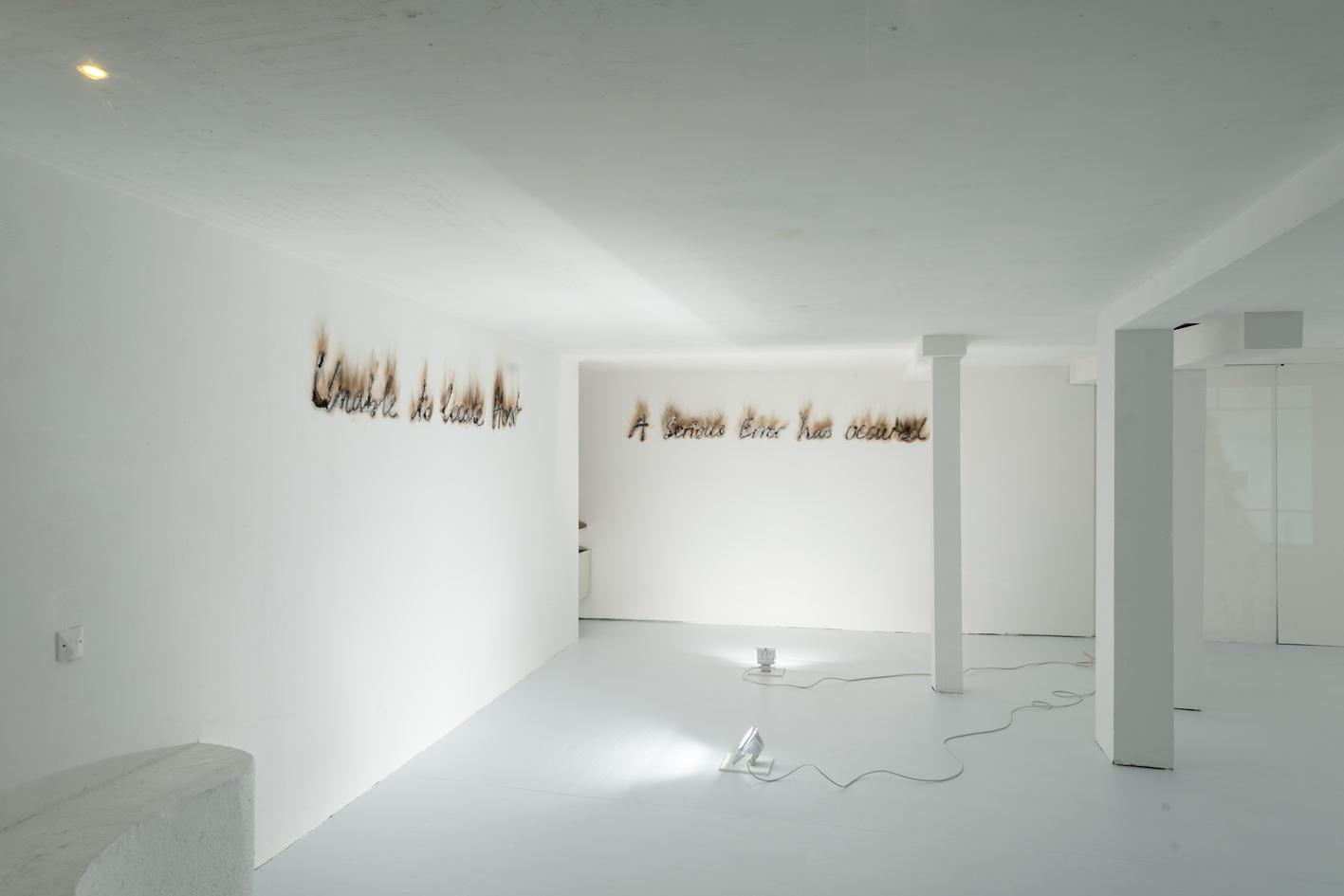
2013, vues de l’exposition Forever until the End
Exposition de Sophie Blum & Reynald Drouhin du 9 novembre au 8 décembre 2013 à la galerie Schaufenster.
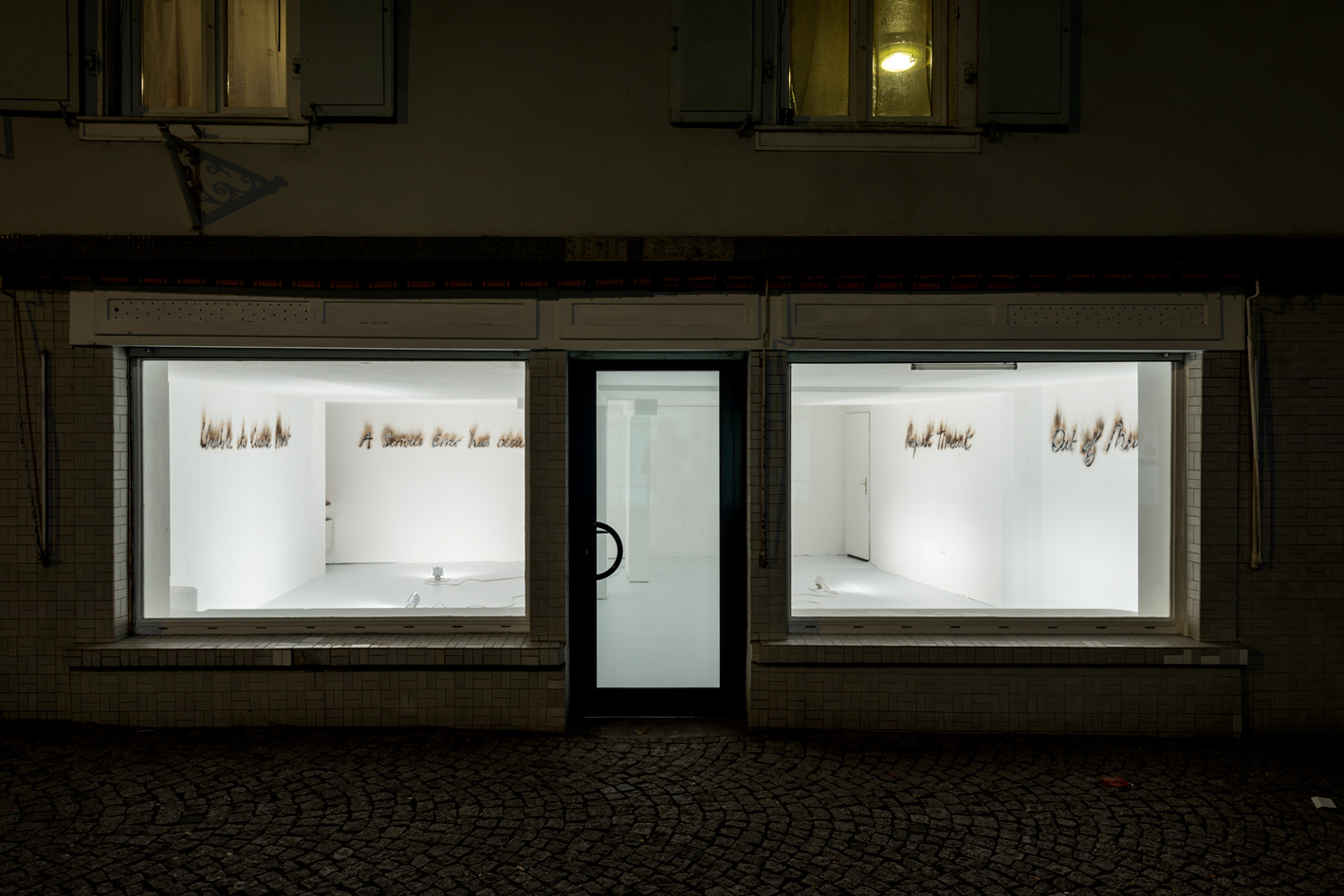
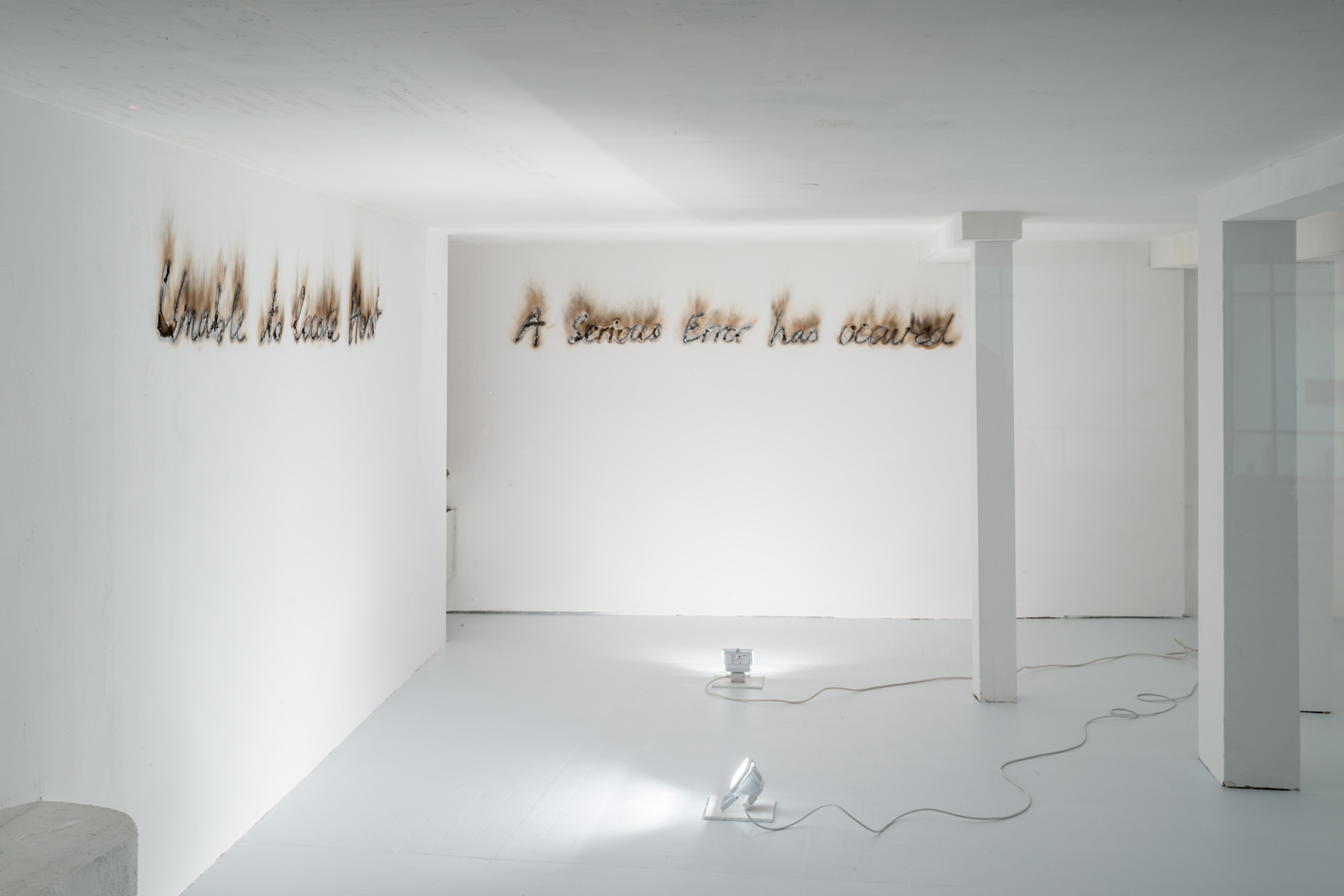
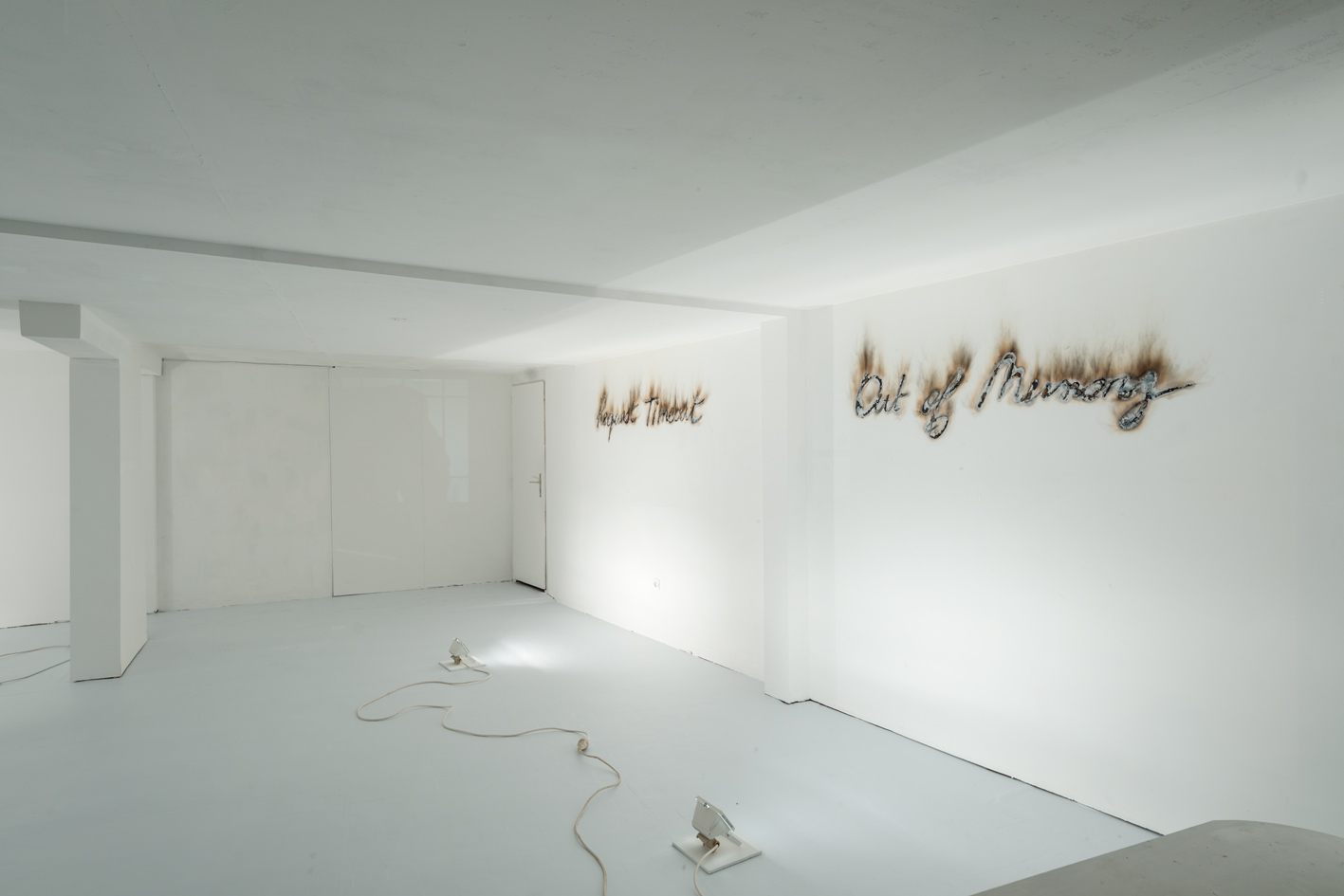


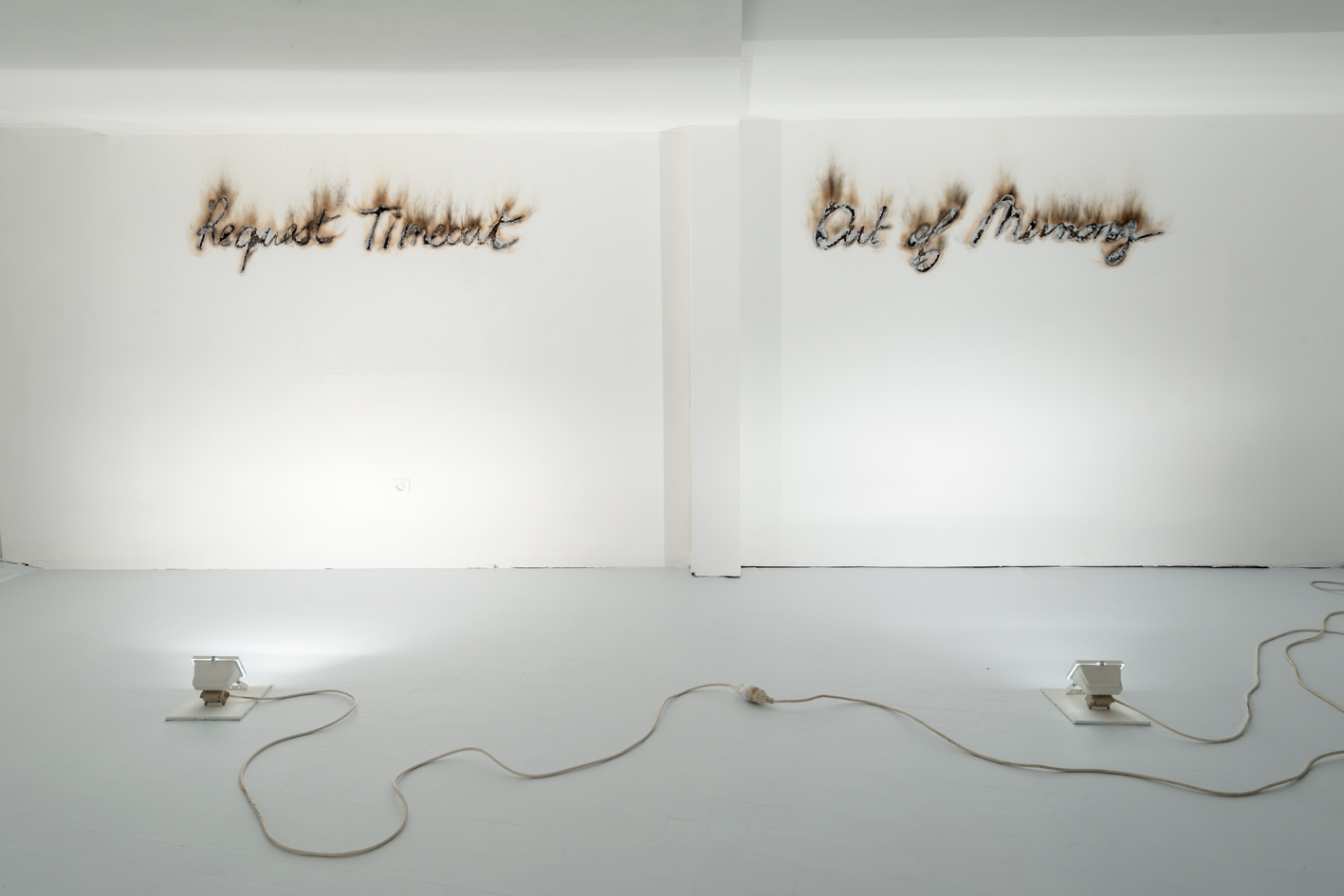

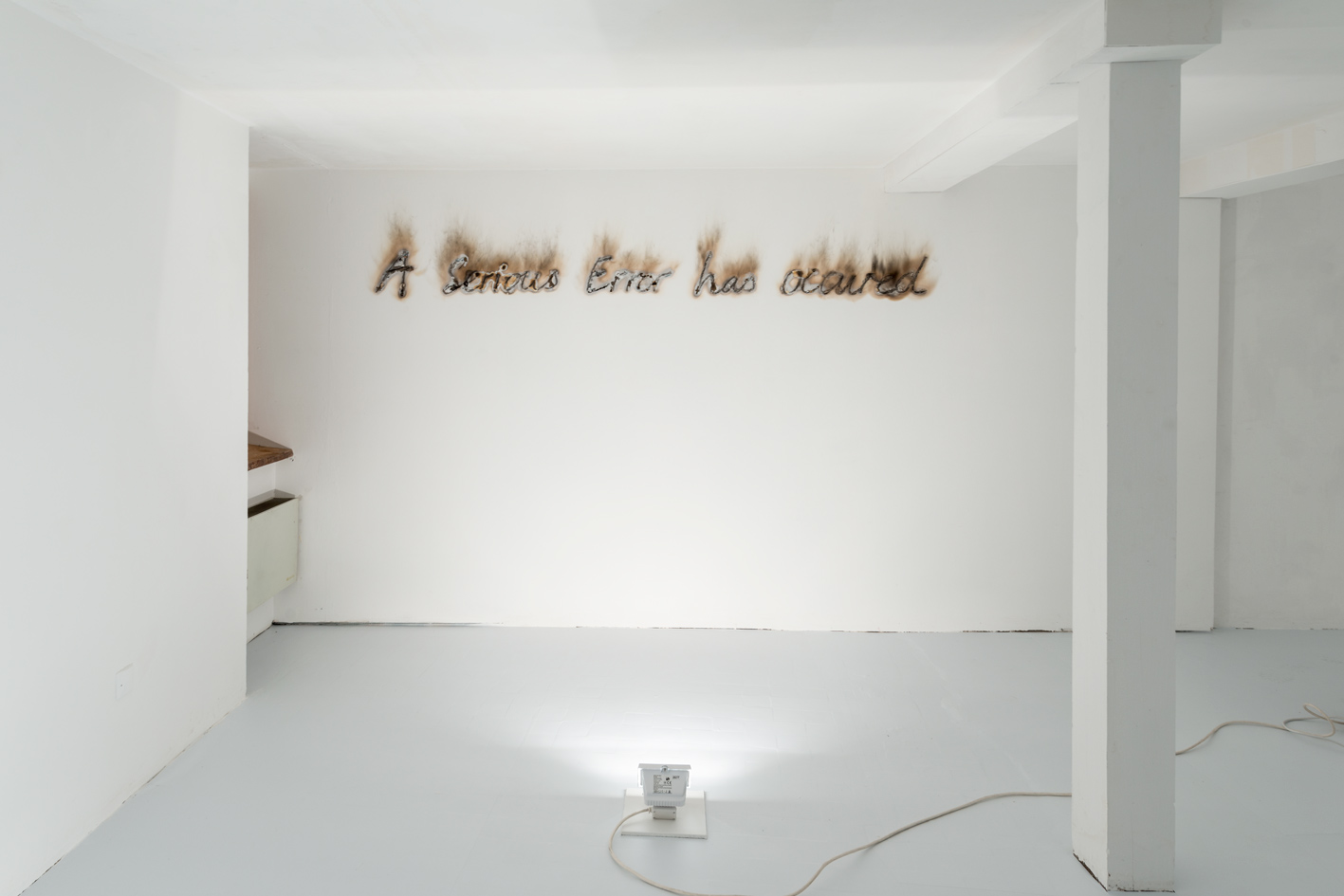
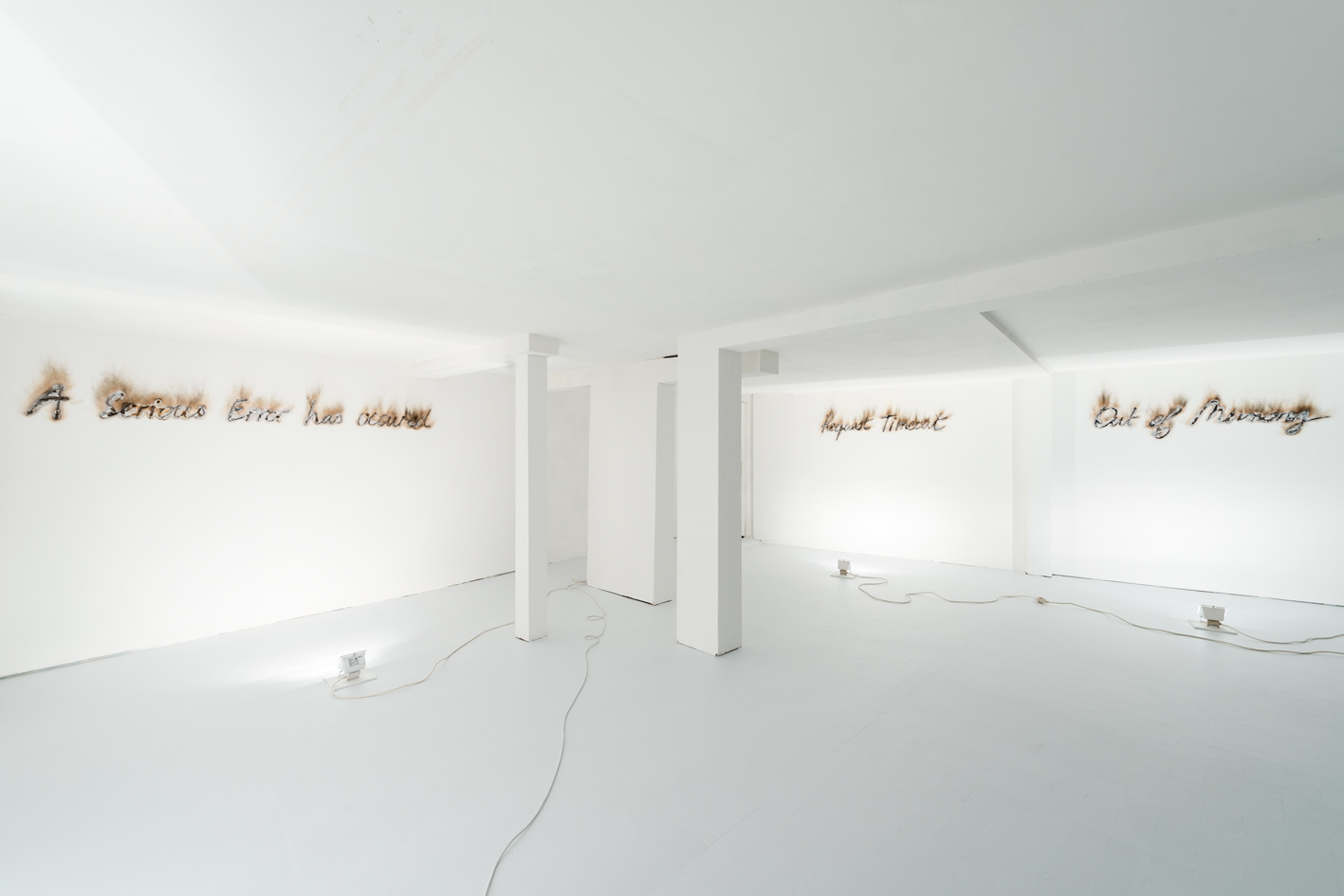
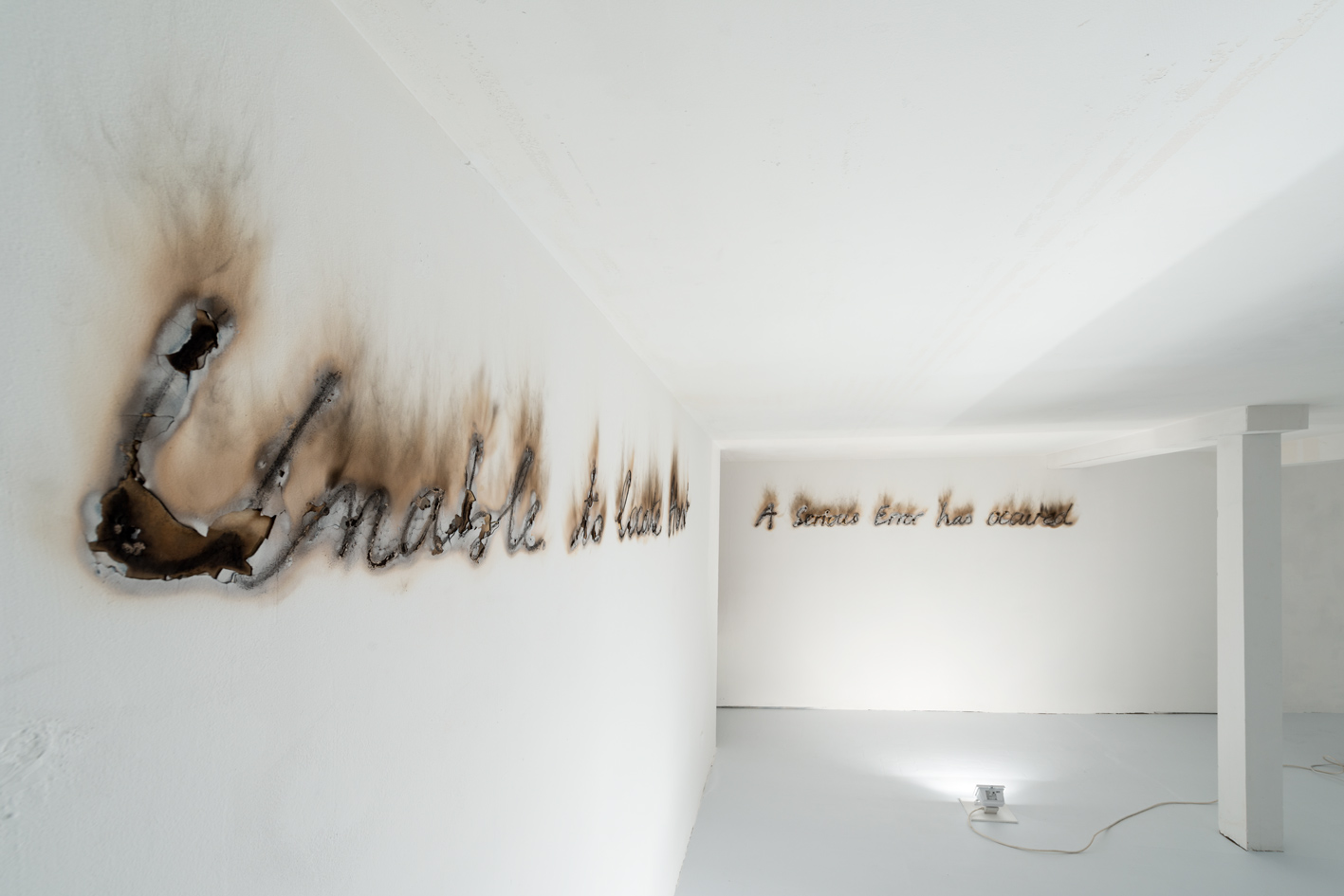
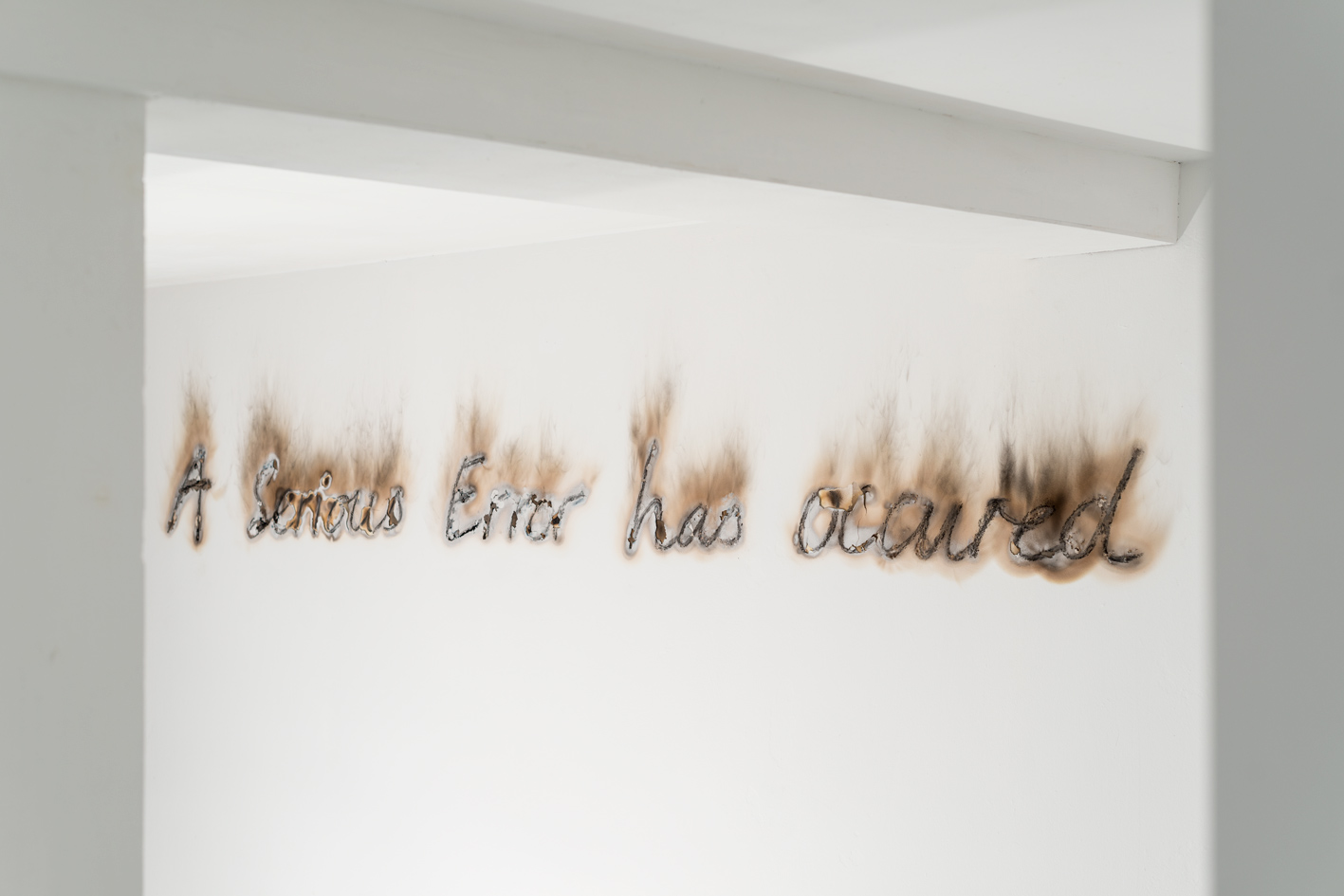
Prise de vue de l’exposition Florian Tiedje
Réalisé en 2013 avec Sophie Blum, Forever Until the End est une installation in situ composée de messages d’erreurs informatiques directement inscrits par brûlure sur les murs de la galerie. « OUT OF MEMORY », « SERVICE TEMPORARILY OVERLOADED », « UNABLE TO LOCATE HOST », « REQUEST TIMEOUT » ou « A SERIOUS ERROR HAS OCCURRED » quittent ainsi l’écran pour entrer physiquement dans l’espace.
Sorties de leur contexte technique, ces phrases changent de statut. Elles ne décrivent plus seulement les défaillances d’un ordinateur ou d’un réseau : elles peuvent évoquer des situations humaines, sociales, économiques ou écologiques. Le vocabulaire de la machine devient un langage possible de la crise contemporaine.
Le choix de la brûlure accentue ce déplacement. L’erreur n’est pas simplement écrite, elle marque matériellement le mur. Le feu transforme le message en trace, entre graffiti, cicatrice et signal d’alerte. Ce qui, sur un écran, serait temporaire et destiné à disparaître après résolution du problème devient ici une inscription physique et durable.
Le titre Forever Until the End porte la même contradiction. La formule évoque d’abord une promesse absolue, presque sentimentale, mais elle contient déjà sa propre limite : « toujours » ne dure que « jusqu’à la fin ». Appliquée non plus seulement au couple mais aux systèmes qui organisent la société, cette promesse devient ambiguë, entre persévérance et effondrement.
La succession des messages produit ainsi une forme de narration. Chaque erreur annonce un obstacle, mais aussi la tentative implicite de continuer malgré lui. Le bug ne constitue pas nécessairement la fin du système : il en révèle momentanément la fragilité, les limites et les mécanismes habituellement invisibles.
Forever Until the End déplace finalement l’erreur du domaine informatique vers celui de l’expérience collective. La machine fournit le vocabulaire, le geste humain l’inscrit dans la matière, et le feu lui donne la forme d’un avertissement : un système continue de fonctionner jusqu’au moment où ses erreurs ne peuvent plus être ignorées.
Created in 2013 with Sophie Blum, Forever Until the End is an in situ installation composed of computer error messages burned directly onto the gallery walls. “OUT OF MEMORY,” “SERVICE TEMPORARILY OVERLOADED,” “UNABLE TO LOCATE HOST,” “REQUEST TIMEOUT,” and “A SERIOUS ERROR HAS OCCURRED” thus leave the screen and enter physical space.
Removed from their technical context, these phrases shift in meaning. They no longer describe only the failures of a computer or network: they can also evoke human, social, economic, or ecological situations. The language of the machine becomes a possible vocabulary for contemporary crisis.
The use of burning intensifies this displacement. The error is not simply written; it physically marks the wall. Fire transforms the message into a trace, somewhere between graffiti, scar, and warning signal. What would normally appear temporarily on a screen and disappear once the problem is resolved becomes here a material and lasting inscription.
The title Forever Until the End carries the same contradiction. The phrase initially suggests an absolute promise, almost sentimental in tone, yet it already contains its own limit: “forever” lasts only “until the end.” Applied not only to personal relationships but also to the systems that organize society, this promise becomes ambiguous, suspended between persistence and collapse.
The sequence of messages produces a form of narrative. Each error announces an obstacle, but also implies an attempt to continue despite it. A bug does not necessarily mean the end of a system; it temporarily exposes its fragility, its limits, and the mechanisms that usually remain invisible.
Forever Until the End ultimately shifts error from the field of computing into that of collective experience. The machine provides the vocabulary, the human gesture inscribes it into matter, and fire gives it the form of a warning: a system continues to function until the moment when its errors can no longer be ignored.